D. W. Winnicott's Transitional Objects
Jack Rohloff
Another interesting connection lies between D.W Winnicott’s writing on transitional objects and our research. Winnicott argues that transitional objects are not merely bridges between people, but also tools that aid in the psychological process of detachment and reattachment, notably seen with children’s toys during the process of weaning. Psychoanalytic theory has long understood mourning itself to be modeled on weaning, as both involve a gradual detachment from a loved one or object, and physical tools become vital tools in these processes. Just as a toy or blanket helps a weaning child separate from its mother and begin forming an individual self, a handful of dirt dropped into a grave helps the living detach from the dead while also marking the dead’s passage out of the world of the living, initiating the process of grief. Seen through this framework, the headstones of the Cartwright and Duckett families can be viewed as transitional objects themselves: anchoring current reality to those who have passed and allowing for the formation of a relationship with individuals whose experiences might otherwise remain unreachable. The grave stones thus fulfill Winnicott's transitional phenomenon by physically establishing a fixed memory of the dead while also a forced recognition that the dead are no longer living.
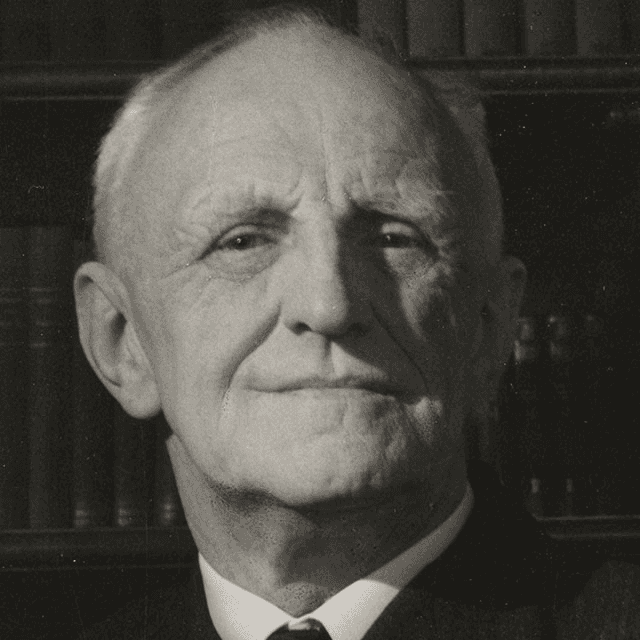
Further, as we have progressed with our research, the letters, archives, and records of these families too function as transitional objects, allowing us to create some sort of relationship with people whose worlds otherwise remain wholly inaccessible and unknown. These materials operate much like Winnicott’s transitional objects: they are concrete artifacts that aid us in imagining and interpreting the historical experiences of the Cartwrights and the Ducketts. In this sense, the process of archival research becomes a Winicottian transitional space, as it bridges the gaps between self and other, me and not me, through material transitional objects, just as Winnicott explores in his transitional objects theory.
"About Donald Winnicott," Top Banner, winnicott-trust.org.uk/wp-content/uploads/2024/02/Winnicott-trust-page-banner-about.jpg, The Winnicott Trust.
In the Mount Zion - Female Band Union Cemetery, where Reverend Joseph Cartwright, Lewis Cartwright, and Gracie Duckett lie to this day, there is a prevalent tradition of leaving objects on the graves. The grave of a woman named Nannie is one particular example of such that illuminates this connection: her grave is adorned with children's toys and books, and community members to this day continue to add more. Interestingly, no one has any idea of who Nannie was or what her role was in Georgetown, yet she sparks a fascination that leads to people leaving objects on her grave. According to Lisa Fager, all of the graves in the cemetery once had collections of objects from their loved ones, but when the graves were moved the objects were lost. Winnicott provides a framework for analyzing and understanding how these objects are used by the living to connect the physical world: the toys left on graves can clearly be viewed as transitional objects that work to bridge the gap between the living and the dead. In an article by Dr. Auslander and Lisa Fager Nannie's Stone: Commemoration and Resistance, they explore the historical practice of “Black memorialization practices, dating back into the era of enslavement.” They made a fascinating connection to Winnicott, discussing how these objects serve as intermediate objects: “By repeatedly touching intermediate objects, mourners gradually come to terms with a painful loss and in time relinquish the full burden of their immediate grief,” reinforcing the idea that these toys can be seen as transitional objects that help one deal with grief and connect with the dead. The analysis here can go much further, but for the sake of this brief connection, we just want to note how interesting and complex this connection could be.
"About Donald Winnicott," Top Banner, The Winnicott Trust.